
The Psychology of Social Deduction Games: Why We Love Finding Imposters
Explore the fascinating psychology behind social deduction games. Learn why games like Imposter Who are so addictive and how they bring people closer together.
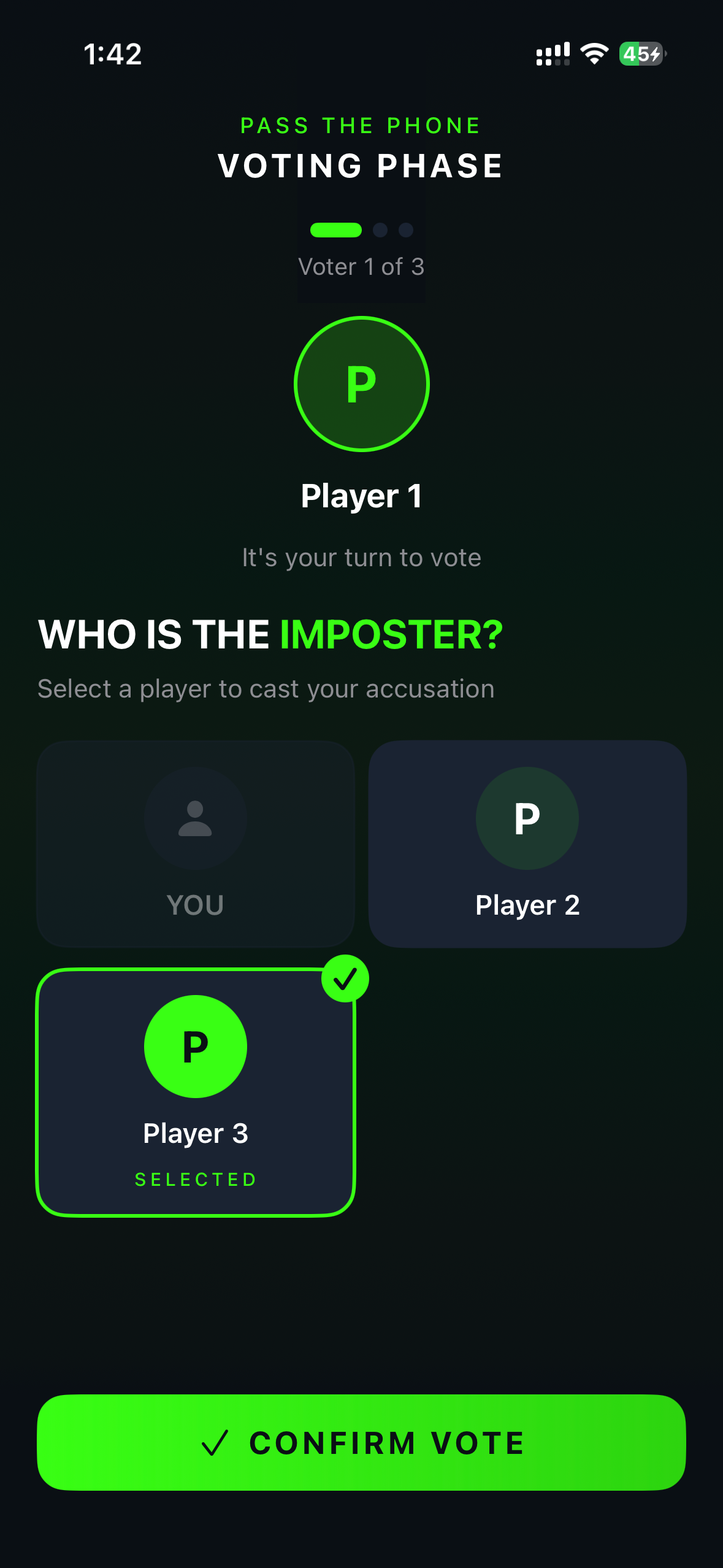
Have you ever wondered why accusing your best friend of being an imposter feels so thrilling? Or why we spend hours trying to detect lies in a party game when we could be doing anything else? The answer lies deep in human psychology, and it's more fascinating than you might think.
The Evolutionary Roots of Deception Detection
Humans have evolved as social creatures, and with that comes an inherent need to detect dishonesty. Throughout our evolutionary history, being able to identify who we could trust was literally a matter of survival.
Social deduction games tap into these ancient neural pathways. When you're trying to figure out who the imposter is in Imposter Who, you're activating the same brain regions your ancestors used to determine which tribe members were trustworthy. The stakes are much lower now (no one gets eaten by a saber-toothed tiger), but the thrill remains.
The Dopamine Rush: Why "Getting It Right" Feels So Good
When you successfully identify the imposter, your brain releases a surge of dopamine - the same neurotransmitter associated with rewards, pleasure, and motivation. This chemical reward system is why:
- Correctly accusing the imposter feels incredibly satisfying
- We want to play "just one more round"
- Even losing as an imposter feels exciting if you almost got away with it
- The anticipation of the reveal is almost as thrilling as the reveal itself
The Psychology of Near Misses
Research shows that "near misses" - almost getting caught or almost winning - trigger similar dopamine responses to actual wins. This is why close games feel more exciting and memorable than blowouts. In Imposter Who, every round has these near-miss moments!
Social Bonding Through Playful Conflict
Here's a counterintuitive truth: accusing each other of being imposters actually strengthens friendships. Psychologists call this "play fighting" or "benign violation" - engaging in conflict within a safe, structured environment.
When you dramatically accuse your friend of being the imposter (and they're not), you both laugh about it afterward. These shared moments of playful tension and release create stronger social bonds than passive activities like watching TV together.
The Appeal of Hidden Information
Social deduction games are fundamentally about asymmetric information - some players know things others don't. This creates several psychological phenomena:
The Spotlight Effect
Imposters often feel like everyone is watching them, leading to nervous behaviors that observant players can detect.
Confirmation Bias
Once we suspect someone, we tend to interpret all their actions as suspicious, even innocent ones.
The Power of Secrets
Being an imposter gives you a sense of power - you know something others don't, creating a thrilling tension.
Theory of Mind
Players must constantly model what others are thinking, exercising crucial social cognition skills.
Why These Games Are Great for Groups
Social deduction games have unique properties that make them exceptional for group bonding:
- Equalizing effect: Everyone has a chance to win, regardless of skill level or experience
- Shared stories: "Remember when Alex convinced everyone they weren't the imposter?" becomes a legendary story
- Active participation: Unlike many games, everyone is involved at all times
- Safe practice: It's a low-stakes environment to practice reading people and social skills
- Reveals personality: You learn how friends behave under pressure
The Perfect Icebreaker: Science-Backed
Studies in organizational psychology have shown that games involving mild deception are among the best icebreakers for new groups. Why? Because they:
- Quickly break down social barriers through shared laughter
- Give people permission to be playful and silly
- Create instant shared experiences and inside jokes
- Help quiet people participate (everyone has a role to play)
- Reveal personality traits in a fun, non-threatening way
Digital vs. In-Person: The Imposter Who Advantage
While online social deduction games have their place, research suggests that in-person play offers unique benefits:
- Non-verbal cues: 70-93% of communication is non-verbal - you can't read body language through a screen
- Physical presence: Being in the same room creates stronger emotional connections
- Immediate reactions: The gasp when the imposter is revealed is more impactful in person
- No technical barriers: No lag, disconnections, or screen fatigue
This is exactly why Imposter Who is designed for local, pass-the-phone gameplay. One phone, all friends present, maximum social interaction.
The Verdict: Play More Social Deduction Games!
Whether you're looking to strengthen friendships, break the ice with new acquaintances, or simply have an unforgettable game night, social deduction games like Imposter Who offer science-backed benefits wrapped in pure fun. Your brain evolved to play these games - so give it what it wants!
Experience the Psychology Firsthand
Download Imposter Who and discover why millions love social deduction games!